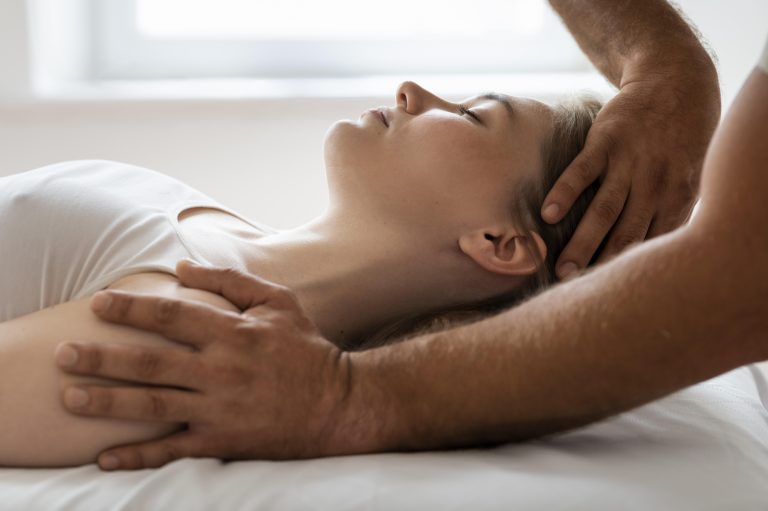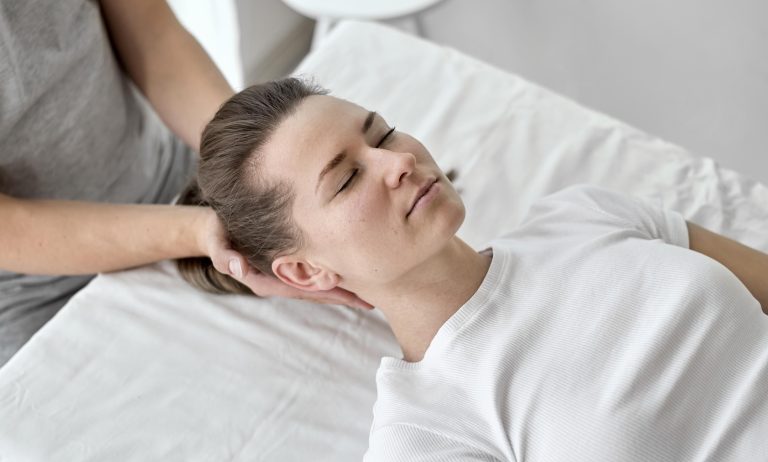

Spinal pain can affect almost every part of daily life – from sitting and working to exercising, driving, and sleeping. While the pain may feel as though it comes directly from the spine, muscles and other soft tissues surrounding the neck, back, shoulders, and hips can also contribute to discomfort and stiffness.
Massage therapy may help when muscular tension is part of the problem. However, not every type of spinal pain is caused by tight muscles, and massage cannot correct every spinal condition.
At Spinal Recovery and Joint Center in Warren, Michigan, massage therapy may be incorporated into an individualized treatment plan alongside chiropractic care, physical rehabilitation, spinal decompression, and other treatments when appropriate.
Can Massage Help With Spinal Pain?
It can help some people, particularly when pain or stiffness has a significant muscular component.
Massage therapy primarily works with muscles and other soft tissues. Depending on the individual, it may help:
- Reduce muscular tension
- Improve comfortable movement
- Address areas of muscle tightness
- Reduce stress-related muscle tension
- Promote relaxation
- Complement physical rehabilitation
- Improve overall comfort during recovery
The important distinction is that massage treats soft tissues – not the spinal disc, vertebrae, or compressed nerve itself.
For example, massage may help reduce muscular tension surrounding an irritated area, but it does not repair a herniated disc or reverse spinal stenosis.
What Types of Spinal Pain May Have a Muscular Component?
Muscular tension may accompany many different problems.
Muscle Strain and Overuse
Physical work, repetitive movements, exercise, lifting, or suddenly increasing activity can strain muscles around the spine.
Massage may be useful once serious injury has been ruled out and the treatment is appropriate for the stage of recovery.
Postural and Work-Related Muscle Tension
Remaining in one position for extended periods – whether sitting at a computer, driving, or performing repetitive physical work – can contribute to muscular fatigue and stiffness.
Massage may help address some of this associated soft-tissue tension.
Chronic Back or Neck Pain
Chronic pain is complex and may involve muscles, joints, discs, nerves, activity patterns, previous injuries, and other factors.
Massage may be one component of treatment when muscular tension contributes to symptoms, but persistent spinal pain should not automatically be assumed to be muscular.
Sciatica
Sciatica is generally associated with irritation or compression affecting a nerve root that contributes to the sciatic nerve.
Massage does not directly decompress the nerve, but it may help address muscular tension around the lower back, hips, or buttocks in some patients.
Learn more in our guide to the Best Types of Massage for Sciatica Relief.
Herniated Discs
A herniated disc can sometimes irritate nearby nerves, resulting in back or neck pain as well as radiating symptoms.
Massage does not repair a herniated disc, but it may sometimes be incorporated into a broader treatment plan to address surrounding muscular tightness.
If you have been diagnosed with a disc problem, read Living With a Herniated Disc: How It Can Affect Your Daily Life.
Benefits of Massage Therapy for Spinal Pain
The potential benefits depend on what is causing the symptoms.
1. Reduces Muscle Tension
One of massage therapy’s primary roles is working with tight or overworked muscles.
Spinal discomfort can sometimes cause surrounding muscles to become tense or guarded. In other situations, muscular tension itself contributes to discomfort.
Massage may help these muscles relax and make movement more comfortable.
2. May Reduce Muscle Soreness and Stiffness
Soft-tissue techniques may help some people manage muscular soreness and stiffness.
This can be particularly useful when symptoms are associated with:
- Physical activity
- Prolonged sitting
- Repetitive work
- Muscle overuse
- Stress-related tension
3. May Improve Comfortable Range of Motion
Tight muscles around the neck, shoulders, back, or hips can make certain movements uncomfortable.
Addressing soft-tissue restrictions may make bending, turning, reaching, or moving the neck feel easier for some patients.
However, significant or persistent loss of movement warrants proper evaluation.
4. Promotes Relaxation
Stress and pain can reinforce each other.
Some people unconsciously tighten their shoulders, neck, or back when stressed. Massage can promote relaxation and may reduce this component of muscular tension.
5. Can Complement Rehabilitation
Massage and physical rehabilitation serve different purposes.
Massage primarily addresses soft tissues, while rehabilitation may focus more heavily on:
- Strength
- Mobility
- Movement control
- Balance
- Functional activities
- Gradual return to activity
For selected patients, combining approaches may be more appropriate than relying on massage alone.
What Is the Best Massage Technique for Spinal Pain?
There is no single best massage technique for every type of spinal pain.
The appropriate technique depends on:
- Where symptoms are located
- What is causing the pain
- Whether nerves are involved
- How sensitive the area is
- Whether there was a recent injury
- Your health history
- Your tolerance for pressure
Here are several commonly used approaches.
1. Swedish Massage
Swedish massage generally uses lighter to moderate pressure and longer, flowing movements.
It may be suitable when the primary goals are:
- Relaxation
- General muscular tension reduction
- Mild stiffness
- Stress-related neck or back tension
- A gentler massage experience
Swedish massage can be a reasonable option for people who do not tolerate deeper pressure well.
2. Deep Tissue Massage
Deep tissue massage uses slower and more focused pressure to work with deeper muscular tension.
It may be considered when someone has persistent areas of muscle tightness or stiffness.
However, deeper pressure does not automatically mean a more effective treatment.
Massage should not require severe pain to “work,” and aggressive pressure may be inappropriate when symptoms involve an acute injury or irritated nerve.
For a detailed comparison, see Deep Tissue vs. Swedish Massage for Back and Spinal Pain.
3. Trigger Point Therapy
Trigger points are localized sensitive areas within muscles that may produce pain locally or refer discomfort elsewhere.
Trigger point techniques apply controlled pressure to selected muscular areas.
For example, treatment might focus on tight muscles around the:
- Upper back
- Shoulders
- Lower back
- Hips
- Buttocks
The appropriate areas depend on the patient’s symptoms rather than simply massaging directly where pain is felt.
4. Myofascial Techniques
Fascia is connective tissue that surrounds and supports muscles and other structures.
Myofascial techniques typically use controlled pressure or stretching to work with areas of soft-tissue restriction.
They may be incorporated when muscle and fascial tightness appear to contribute to restricted or uncomfortable movement.
5. Sports Massage
Sports massage may be appropriate for physically active people whose spinal discomfort is accompanied by muscular overuse or tightness.
Treatment may focus not only on the painful area but also on muscles involved in the activity that may be overloaded.
Sports massage should still be adapted to the individual’s condition and should not be used to push through significant neurological symptoms.
What About Hot Stone Massage for Spinal Pain?
Heat can feel relaxing and may temporarily help some people with muscular stiffness.
However, hot stone massage should not be presented as a treatment that corrects spinal conditions, reduces nerve compression, or heals a herniated disc.
It is better viewed primarily as a relaxation-oriented technique that may help with muscular comfort in appropriate patients.
Deep Tissue vs. Swedish Massage: Which Is Better for Spinal Pain?
The answer depends on the problem.
Swedish massage may be preferable when:
- You want lighter pressure
- Stress contributes to muscular tension
- You have generalized stiffness
- Relaxation is an important goal
Deep tissue massage may be considered when:
- There are specific areas of persistent muscular tightness
- You tolerate firmer pressure
- The problem is primarily muscular
- A therapist determines focused work is appropriate
Neither technique should be considered universally superior.
Where Should Massage Be Performed for Back Pain?
Massage does not necessarily need to focus directly over the painful part of the spine.
Depending on the problem, treatment may involve muscles around the:
- Lower back
- Mid-back
- Upper back
- Shoulders
- Hips
- Gluteal region
A qualified therapist should select treatment areas based on the patient’s symptoms and assessment.
Should You Massage Directly Over the Spine?
Massage techniques generally focus on muscles and soft tissues around the spine rather than applying aggressive pressure directly to the vertebrae.
Pressure should always be adapted to the area being treated and the patient’s comfort.
If a particular technique produces sharp pain, radiating symptoms, numbness, or tingling, tell the therapist immediately.
Can Massage Help a Pinched Nerve?
This requires an important distinction.
Massage may help surrounding muscular tension, but it does not necessarily remove the structural cause of nerve compression.
Symptoms suggesting nerve involvement can include:
- Shooting pain
- Burning pain
- Pain traveling into an arm or leg
- Numbness
- Tingling
- Weakness
These symptoms may require evaluation to determine where the nerve is being affected.
Can Massage Help Sciatica?
For some people, yes — particularly when muscular tightness around the lower back, hips, or buttocks contributes to discomfort.
However, sciatica is a nerve-related condition, so massage is not appropriate as the sole treatment for every case.
If symptoms include significant or progressive weakness, numbness, or worsening radiating pain, appropriate medical evaluation is important.
Read more about Sciatica Treatment.
Can Massage Help a Herniated Disc?
Massage cannot push a herniated disc back into place or repair damaged disc tissue.
It may be used to address associated muscle tension when appropriate.
Treatment of a symptomatic herniated disc may involve other conservative approaches depending on the patient’s condition.
For selected patients, non-surgical spinal decompression may also be considered.
Massage Therapy vs. Spinal Decompression
These treatments address different aspects of spinal pain.
Massage therapy primarily works with muscles and soft tissues.
Spinal decompression therapy is a non-surgical approach designed around certain spinal and disc-related conditions.
One is not simply a stronger version of the other.
The appropriate treatment depends on the source of the patient’s symptoms.
Massage Therapy vs. Physical Therapy
Massage may reduce muscular tension and promote relaxation.
Physical therapy and rehabilitation typically place greater emphasis on restoring function through movement, strengthening, mobility exercises, and progressive activity.
For some patients, massage may complement physical rehabilitation.
For example, someone with a herniated disc may require an individualized exercise program rather than relying on passive treatments alone. See our guide to Physical Therapy Exercises for Herniated Discs.
Massage Therapy vs. Chiropractic Care
Massage and chiropractic care also have different roles.
Massage primarily targets muscles and other soft tissues. Chiropractic treatment involves different approaches to musculoskeletal and spinal complaints.
Depending on the diagnosis, these treatments may sometimes be incorporated into the same overall care plan.
Can Massage Make Spinal Pain Worse?
It can in some circumstances.
Mild temporary muscle soreness can occur after massage, particularly with firmer techniques.
But massage should be stopped or modified if you develop:
- Sharp pain
- Increasing radiating pain
- New numbness or tingling
- Increasing weakness
- Significant worsening of symptoms
More pressure is not necessarily better.
When Should You Avoid Massage for Back or Spinal Pain?
Massage may not be appropriate in some circumstances, particularly without medical clearance.
Examples can include:
- Suspected fracture
- Significant recent trauma
- Certain vascular or blood-clotting conditions
- Open wounds or skin infections
- Recent surgery
- Significant osteoporosis
- Acute unexplained neurological symptoms
Your medical history matters, so tell your provider and massage therapist about relevant conditions and medications.
When Is Spinal Pain More Than Muscle Tension?
This is one of the most important questions.
Consider professional evaluation if back or neck pain:
- Persists or repeatedly returns
- Becomes progressively worse
- Travels into an arm or leg
- Causes numbness or tingling
- Is associated with weakness
- Significantly affects walking
- Began after significant trauma
- Interferes substantially with everyday activities
You can also read 7 Early Signs Your Back Pain Needs Professional Treatment.
Seek urgent medical attention for symptoms such as new bowel or bladder dysfunction, saddle-area numbness, rapidly progressive weakness, or severe neurological symptoms following significant trauma.
Frequently Asked Questions
Is massage good for spinal pain?
Massage may help when muscular tension or other soft-tissue problems contribute to spinal discomfort. It does not treat every cause of spinal pain.
What is the best massage for spine pain?
There is no single best technique. Swedish, deep tissue, trigger point, myofascial, and other techniques may be considered depending on symptoms and treatment goals.
Is deep tissue massage good for back pain?
It may be useful for some types of muscular tightness, but it is not appropriate for every back condition. More pressure does not automatically produce better results.
Can massage help a pinched nerve?
Massage may help surrounding muscle tension but cannot be assumed to eliminate the cause of nerve compression. Radiating pain, numbness, tingling, or weakness should be appropriately evaluated.
Can massage help a herniated disc?
Massage does not repair the disc itself. It may sometimes help with muscular tension associated with the condition.
Can massage help sciatica?
Massage may help some people manage muscular tension associated with sciatica, but the underlying nerve irritation may require other treatment.
How often should you get a massage for spinal pain?
There is no universal schedule. Frequency depends on the cause of symptoms, treatment goals, health history, response to treatment, and other therapies being used.
Should massage hurt to be effective?
No. Some techniques may involve firm pressure, but severe pain is not required for an effective massage. Sharp, radiating, or neurological symptoms should not be ignored.
Massage Therapy for Spinal Pain in Warren, MI
If spinal pain is affecting your work, sleep, mobility, exercise, or everyday activities, identifying the cause of your symptoms is more important than simply choosing the strongest massage technique.
Spinal Recovery and Joint Center provides multidisciplinary care for spinal and musculoskeletal conditions in Warren, Michigan. Depending on the individual, treatment may incorporate massage therapy, chiropractic care, physical rehabilitation, spinal decompression, and other approaches.
Spinal Recovery and Joint Center
2243 East 12 Mile Road
Warren, MI 48092
Phone: (586) 573-8100
Request an appointment to discuss your symptoms and determine which treatment options may be appropriate.