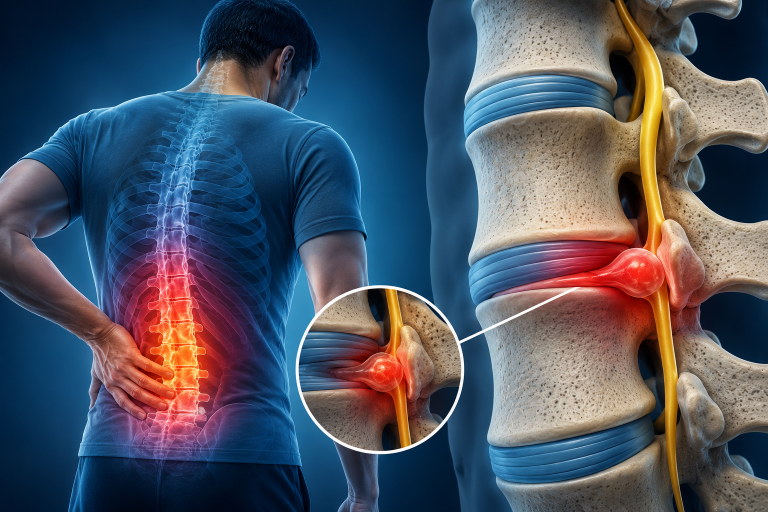

A herniated disc can affect much more than your back. Depending on its location and whether a nearby nerve is irritated, symptoms can interfere with sitting, walking, working, driving, exercising, sleeping, and other everyday activities.
Some people with a herniated disc have few or no symptoms, while others experience significant pain, numbness, tingling, or weakness.
If you have been diagnosed with a herniated disc, understanding what may aggravate your symptoms — and what you can safely continue doing – can make daily life easier while you work with a healthcare professional on an appropriate treatment plan.
At Spinal Recovery and Joint Center in Warren, Michigan, herniated discs are among the spinal conditions treated through individualized, non-surgical and multidisciplinary care. Spinal Recovery and Joint Center
What Is a Herniated Disc?
Your spine contains discs between the vertebrae that help absorb forces and allow movement.
A herniated disc occurs when material from inside a spinal disc extends through its outer layer.
A herniated disc does not always cause pain. Symptoms are more likely when disc material irritates or compresses a nearby nerve.
Depending on the location, symptoms may include:
- Lower back or neck pain
- Pain traveling into an arm or leg
- Burning or shooting pain
- Numbness
- Tingling
- Muscle weakness
- Difficulty with certain movements
A lumbar herniated disc can also contribute to sciatica, which commonly causes radiating pain, numbness, tingling, or weakness in the leg. Spinal Recovery and Joint Center
How Can a Herniated Disc Affect Daily Life?
The effects can vary substantially from person to person.
Here are some of the most common ways symptoms may interfere with everyday activities.
1. Sitting Can Become Uncomfortable
For some people with a lumbar disc problem, prolonged sitting can aggravate symptoms.
This can make activities such as:
- Working at a computer
- Driving
- Traveling
- Eating at a table
- Watching television
more difficult.
If sitting aggravates your symptoms, changing positions periodically and following individualized ergonomic recommendations may be helpful.
Avoid assuming there is one “perfect posture” that everyone with a herniated disc must maintain.
2. Walking and Standing May Be More Difficult
A herniated disc affecting a nerve can produce symptoms extending beyond the back.
You may experience:
- Leg pain
- Numbness
- Tingling
- Weakness
- Changes in walking comfort
These symptoms can make shopping, working, exercising, or simply moving around the house more difficult.
Progressive weakness or substantial difficulty walking should be medically evaluated.
3. Bending and Lifting May Aggravate Symptoms
Activities involving bending, lifting, twisting, or combinations of these movements may aggravate symptoms for some people.
This can affect routine tasks such as:
- Picking something up from the floor
- Carrying groceries
- Doing laundry
- Gardening
- Moving furniture
- Performing physical work
That does not necessarily mean you must permanently avoid bending or lifting.
During rehabilitation, the goal may include gradually restoring your ability to perform necessary movements safely and comfortably.
4. A Herniated Disc Can Affect Your Job
Both physical and sedentary jobs can become challenging.
Physical Jobs
Jobs involving repeated lifting, carrying, bending, or twisting may be difficult during a symptomatic period.
Temporary modifications may sometimes be necessary depending on the severity of the condition and your provider’s recommendations.
Desk Jobs
A desk job is not automatically easy for someone with a herniated disc.
Long periods of sitting can be uncomfortable for some patients, especially when symptoms involve the lower back or sciatic nerve.
Changing positions and taking appropriate movement breaks may be useful.
The center also provides rehabilitation for work-related injuries, including programs focused on restoring function and supporting a safe return to work. Spinal Recovery and Joint Center
5. Driving Can Become Uncomfortable
Driving combines prolonged sitting with limited opportunities to change position.
Symptoms may become particularly noticeable during longer drives.
Depending on your condition, strategies may include:
- Adjusting the seat position
- Avoiding unnecessary long periods of uninterrupted driving
- Taking movement breaks on longer trips
- Following recommendations from your healthcare provider
Do not drive if weakness, severe pain, medication effects, or other symptoms make it unsafe to control the vehicle.
6. Sleep May Be Disrupted
Pain, tingling, or difficulty finding a comfortable position can interfere with sleep.
There is no single sleeping position that is best for every herniated disc.
Some people find certain side-lying or back-sleeping positions more comfortable, while others need different positioning based on where the disc problem is located.
Rather than forcing yourself into a particular position, discuss persistent nighttime symptoms with your healthcare provider.
7. Exercise and Recreation May Need to Be Modified
Having a herniated disc does not automatically mean you should stop exercising permanently.
Movement and rehabilitation may play an important role in recovery for many patients.
However, the right exercises depend on:
- Where the herniated disc is located
- Which movements aggravate symptoms
- Whether a nerve is involved
- Your strength and mobility
- Your previous activity level
Spinal Recovery and Joint Center has a separate guide to Physical Therapy Exercises for Herniated Discs. Spinal Recovery and Joint Center
Exercises should be selected for the individual rather than assuming every exercise is safe for every disc problem.
8. Herniated Disc Symptoms Can Affect Mood and Quality of Life
Persistent pain can be frustrating.
When symptoms interfere with work, sleep, exercise, hobbies, or social activities, they may also affect emotional well-being and overall quality of life.
This is another reason to look at the condition comprehensively rather than focusing only on pain intensity.
Improving function – such as being able to walk farther, sleep more comfortably, work, or return to meaningful activities – can also be an important treatment goal.
What Activities Can Make a Herniated Disc Feel Worse?
There is no universal list of activities that every person with a herniated disc must avoid.
However, symptoms may be aggravated by activities such as:
- Prolonged sitting
- Heavy lifting
- Repetitive bending
- Twisting under load
- Sudden high-impact movements
- Activities that reproduce radiating nerve pain
Pay attention to how your symptoms respond rather than assuming that all movement is harmful.
Temporary modification may be appropriate, but unnecessary long-term avoidance of movement can also affect strength and function.
Should You Rest With a Herniated Disc?
A short period of reduced activity may sometimes be appropriate when symptoms are particularly painful, but prolonged bed rest is generally not the goal for uncomplicated back pain.
The appropriate level of activity depends on your condition.
A healthcare professional or physical therapist can help determine which activities you can continue and how to gradually progress.
Is Walking Good for a Herniated Disc?
Walking may be a comfortable form of activity for some people with a herniated disc.
For others, particularly those experiencing significant nerve symptoms or certain forms of spinal narrowing, prolonged walking may aggravate symptoms.
A useful approach is to pay attention to:
- Whether pain increases
- Whether symptoms begin traveling farther down the leg
- Whether numbness or tingling changes
- Whether weakness develops
- How you feel afterward
If walking consistently makes neurological symptoms worse, seek professional guidance.
Can You Work With a Herniated Disc?
Many people can continue working with a herniated disc, but this depends on the severity of symptoms and the physical requirements of the job.
Someone working at a desk may need different modifications than someone whose job requires frequent lifting.
Potential workplace adjustments might include:
- Changing positions more frequently
- Temporary lifting restrictions
- Modifying repetitive tasks
- Adjusting the workstation
- Taking appropriate movement breaks
Return-to-work decisions should be individualized when symptoms are significant.
Can You Exercise With a Herniated Disc?
Often, yes – but the type and intensity of exercise matter.
A rehabilitation program may include exercises designed to address:
- Mobility
- Core and trunk strength
- Hip strength
- Movement control
- Functional activities
Avoid automatically following random “herniated disc exercises” online because the same movement may affect different patients differently.
Our related guide covers physical therapy exercises commonly considered for herniated discs. Spinal Recovery and Joint Center
Can a Herniated Disc Cause Sciatica?
Yes.
A lumbar herniated disc is one possible cause of sciatica when it irritates or compresses a nerve root contributing to the sciatic nerve.
Sciatica symptoms can include:
- Radiating leg pain
- Shooting or burning pain
- Numbness
- Tingling
- Weakness
Learn more about Sciatica Treatment and how the condition can affect everyday activities. Spinal Recovery and Joint Center
How Long Does a Herniated Disc Take to Heal?
There is no single recovery timeline that applies to everyone.
Recovery can depend on factors including:
- The location and characteristics of the disc problem
- Whether nerves are affected
- Severity of symptoms
- Overall health
- Activity demands
- Previous spinal problems
- Response to conservative treatment
Some symptomatic disc problems improve with conservative care, while others require additional evaluation or treatment.
For SEO and medical accuracy, I would avoid promising that a herniated disc will resolve within a specific number of weeks for every patient.
How Do You Know if a Herniated Disc Is Getting Better?
Pain intensity is only one measure.
Possible signs of improvement can include:
- Everyday activities becoming easier
- Improved walking or sitting tolerance
- Better sleep
- Improved mobility
- Reduced radiating symptoms
- Improved strength or function
Changes in neurological symptoms should be discussed with your healthcare provider.
Treatment Options for a Herniated Disc
Treatment depends on the symptoms, examination findings, neurological involvement, and individual patient.
Spinal Recovery and Joint Center currently provides multidisciplinary care including pain management, chiropractic care, physical therapy, and spinal rehabilitation. Spinal Recovery and Joint Center
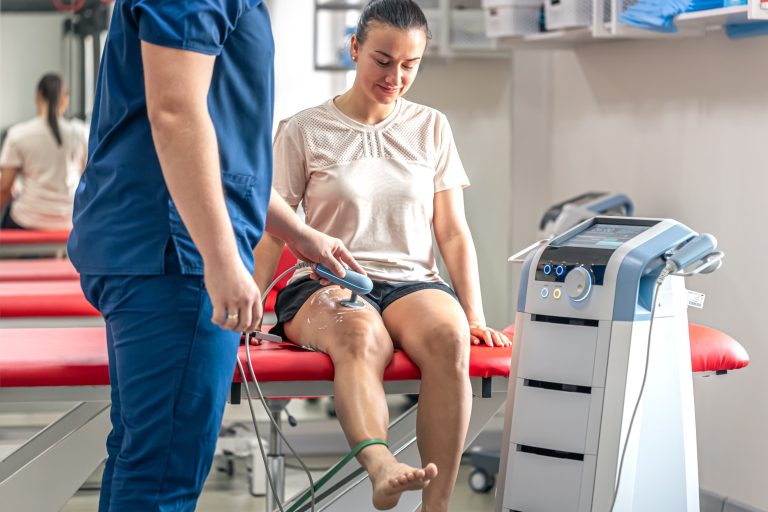
Physical Therapy
Physical therapy may be used to improve strength, mobility, movement, and function.
The program should be individualized rather than based solely on the fact that an MRI shows a herniated disc.
Chiropractic Care
Chiropractic care may be considered for certain patients with musculoskeletal symptoms when clinically appropriate.
The treatment approach should depend on examination findings and the patient’s overall condition.
Spinal Decompression
For selected patients, non-surgical spinal decompression may be considered as part of a treatment plan.
Spinal Recovery and Joint Center currently uses the Triton DTS system for spinal decompression therapy. Spinal Recovery and Joint Center
Pain Management
For persistent or more complex symptoms, pain-management options may also be considered.
The appropriate treatment depends on the source and severity of symptoms rather than using the same treatment for every herniated disc.
When Should You See a Doctor for a Herniated Disc?
Consider professional evaluation if:
- Pain persists or becomes worse
- Pain travels into an arm or leg
- You experience persistent numbness or tingling
- Symptoms interfere with sleep
- Walking or everyday activities become difficult
- You notice weakness
- Symptoms significantly interfere with work
Radiating pain, numbness, tingling, and weakness can indicate nerve involvement. Spinal Recovery and Joint Center
When Is a Herniated Disc an Emergency?
Seek urgent medical care if you experience symptoms such as:
- New loss of bladder or bowel control
- Numbness around the groin or saddle region
- Rapidly worsening or significant weakness
- Severe neurological symptoms following an injury
These symptoms should not wait for a routine chiropractic, massage, or rehabilitation appointment.
Frequently Asked Questions
Can you live a normal life with a herniated disc?
Many people can continue or return to normal activities, although temporary modifications may be needed when symptoms are active. The effect on daily life depends on the severity and cause of symptoms.
Is sitting bad for a herniated disc?
Prolonged sitting can aggravate symptoms for some people, particularly with certain lumbar disc problems. Changing positions and taking appropriate movement breaks may help.
Is walking good for a herniated disc?
Walking can be a useful form of activity for some people, but it should not significantly worsen radiating pain, numbness, or weakness.
What should you avoid with a herniated disc?
There is no universal list. Activities that significantly reproduce or worsen symptoms may need temporary modification while the condition is evaluated and treated.
Can you work with a herniated disc?
Often, yes. Some people may require temporary modifications depending on their symptoms and job demands.
Can you exercise with a herniated disc?
Many people can exercise, but exercise selection should take the location of the disc problem, symptoms, neurological involvement, and individual ability into account.
Can a herniated disc cause leg pain?
Yes. A lumbar herniated disc can irritate a nerve root and cause radiating leg pain, numbness, tingling, or weakness. Herniated discs are also one potential cause of sciatica. Spinal Recovery and Joint Center
Can a herniated disc cause arm pain?
A herniated disc in the cervical spine can affect nerves traveling into the shoulder, arm, or hand, potentially causing radiating pain, numbness, tingling, or weakness.
Does a herniated disc always require surgery?
No. A herniated disc does not automatically mean surgery is required. Treatment depends on symptoms, neurological findings, severity, and response to conservative care.
Herniated Disc Treatment in Warren, Michigan
A herniated disc can interfere with work, sleep, exercise, driving, and other everyday activities, but the appropriate treatment depends on how the condition is affecting you individually.
Spinal Recovery and Joint Center provides multidisciplinary care for herniated discs and related conditions in Warren, Michigan. The center combines pain management, chiropractic care, physical therapy, and spinal rehabilitation and creates individualized treatment plans based on patient symptoms and goals. Spinal Recovery and Joint Center
Spinal Recovery and Joint Center
2243 East 12 Mile Road
Warren, MI 48092
Phone: (586) 573-8100
Request an appointment to discuss your symptoms and appropriate next steps. The appointment form is intended for non-emergency requests. Spinal Recovery and Joint Center